

 The viral clips from the 2026 Milano-Cortina Winter Games are heartbreaking. Elite athletes, after years of sacrifice, are jumping for joy on the podium only to hear a sickening clink as their medal shatters on the floor.
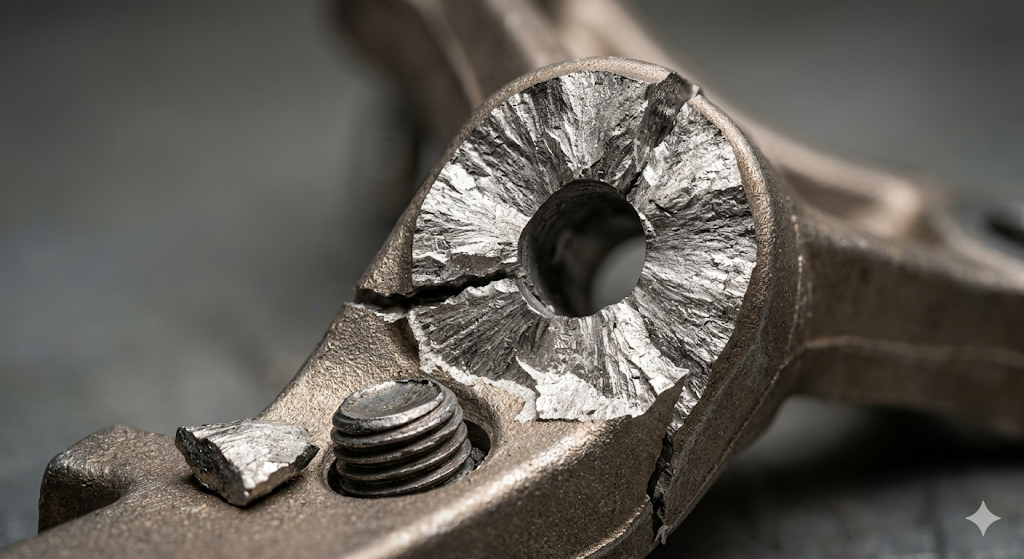
To the general public, it looks like bad luck. To an engineer, it’s a catastrophic failure of structural integrity and fastener validation. The heartbreak in Milan isn’t just about a broken ribbon; it’s about the brittle fracture of the metal itself.
If the IOC wants to save their reputation, they need to stop thinking like jewelers and start thinking like aerospace engineers. Here is the post-mortem on why these medals are breaking and how the testing of individual fasteners could have saved the day.
1. The “Jerk” Factor: Tensile and Shear Testing
An Olympic medal isn’t just a piece of jewelry; it’s a high-mass pendulum. At over 500g, every time an athlete jumps, that weight exerts a massive dynamic load on the fastener connecting the medal to the ribbon.
- The Failure: If the fasteners used weren’t individually rated for the \bm{F = ma} (Force = mass \bm{\times} acceleration) of a celebratory leap, the fastener acts as a “shear pin.”
- The Fix: Every individual fastener must undergo Tensile and Shear Testing. If the hardware can’t handle the “podium jump,” it doesn’t belong around an athlete’s neck.
2. The Invisible Crack: Torque-to-Failure Analysis
The most common cause of “metal breaking metal” is over-torquing during assembly. When a screw is driven into the recycled silver or “eco-alloys” used in 2026, it exerts outward pressure on the hole.
- The Science: If a technician tightens a fastener beyond its Torque-to-Failure (TtF) limit, it creates micro-fractures in the medal’s grain structure.
- The Result: The medal looks perfect at the factory, but it’s a “ticking time bomb.” The first time it hits a hard surface, those micro-fractures connect, and the metal cleaves instantly.
3. The Molecular War: Metallurgical Compatibility
Modern medals often use “historic” or recycled inserts. This creates a “Galvanic” nightmare where different metals react to one another.
- The Problem: Using a stainless steel fastener in a recycled copper-based alloy can cause a tiny battery-like reaction. Over time, this weakens the metal around the fastener.
- The Fix: Engineers must test individual fasteners for Electrochemical Compatibility to ensure the hardware doesn’t “eat” the trophy from the inside out.
The Engineering Verdict
Sustainability and “storytelling” in design are great, but they cannot come at the cost of durability. An Olympic medal is meant to be eternal. Until we prioritize the testing of individual fasteners with the same rigor we use for anti-doping, the world’s most prestigious prizes will continue to fall apart on the world stage.